
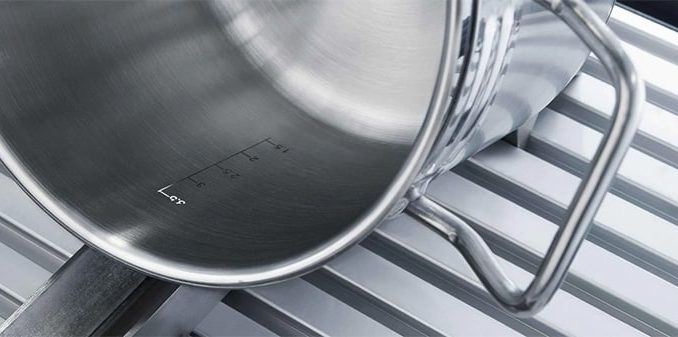
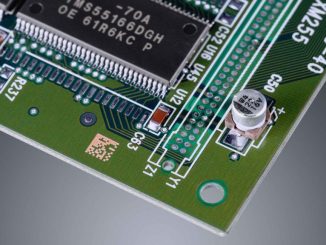
Whether it's identifying parts with QR codes, functionally relevant markings on speedometers and shower heads, or personalising everyday items such as documents or cosmetics, laser marking is all about one thing: variety. But that's not enough. Laser marking meets the highest requirements for traceability and raw materials, as well as counterfeit protection and personalized products. The desire to make components an exclusive storage medium for the smart factory can also be realized with laser marking.
How does laser marking work?
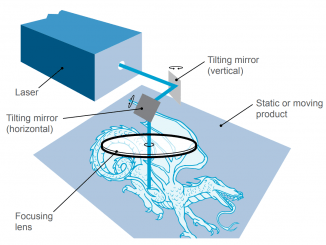
In laser marking, the mark is applied directly to the surface with the help of a highly pulsed laser beam. The interaction of the focused beam with the surface causes changes in the material, such as discoloration, structuring, engraving patterns, or material erosion.
The variation of the material basically depends on the wavelength of the laser, the pulse width, and the intensity of the radiation of the laser beam at the focal point.
Processes in laser marking
Laser marking is an umbrella term for a variety of processes: tempering, engraving, black marking, discoloration, and blistering. But which process is appropriate? This mainly depends on the material and quality requirements of the respective product. For example, the steps that apply to laser marking of metals are very different from those that apply to marking synthetic materials.
Tempering
The laser beam heats the position of the mark to be generated on the workpiece to a certain temperature, which generates a colored tempered mark. At this point, an oxide layer is formed on the surface, and its properties determine the color effect.
Laser marking of synthetic materials
Lasers enable long-lasting and flexible marking of components made of synthetic materials, which are environmentally friendly and gentle on the material. This is because compared to the traditional marking process, there is no need for consumables such as samples or inks.
Laser engraving
During the engraving process, the laser beam ablates the material. A groove is formed in the workpiece - an engraved pattern.
Black marking
Black marking is a laser processing process that produces extremely dark, high-contrast marks on a surface without removing the material.
Comparison: Laser marking vs. alternative marking processes
Compared to traditional marking processes based on color, chemical reactions, or mechanical pressure, non-contact tool lasers offer a number of advantages:
Environmentally friendly: Laser marking is environmentally friendly: Compared to etching, inkjet or screen printing, lasers do not require expensive and environmentally damaging consumables, such as inks or chemicals.
Gentle on the material: Compared to some other processes, laser marking is gentle on the material: there is almost no tool or material wear during laser processing.
Long-lasting, easy-to-read: Laser marking is durable and high-contrast: Compared to many traditional marking processes, laser marking is always legible and highly resistant to chemicals and heat.
Energy saving: Modern laser markers consume less energy than commercially available hair dryers, so the cost is very low.
What are the advantages of laser marking?
Marking is now increasingly being used in industry: by means of laser marking. Because the advantages of laser marking are numerous.
Flexibility
Whether metals, synthetics, or other materials: Lasers can be used to mark a large number of materials and inclusions. It can be processed even on large surfaces and in hard-to-reach locations. In addition, there is no need to perform complex part preparation steps, such as cleaning or polishing surfaces with chemicals. Lasers perform these tasks directly in a single process step.
Quality
High contrast and sharp edges are the hallmarks of laser marking. Even very fine structures and miniature marks can be easily applied.
Easy to integrate
Laser marking machines are ideally suited for use in (fully automated) production processes and documentation systems. Even work that is directly connected to surrounding systems and databases and directly inspected can be easily carried out with the help of an integrated image processing system.
Can be easily customized
Whether it's a design element, a name or a unique mark – standardly-manufactured products can be easily laser-marked with individual logos.

Be the first to comment