
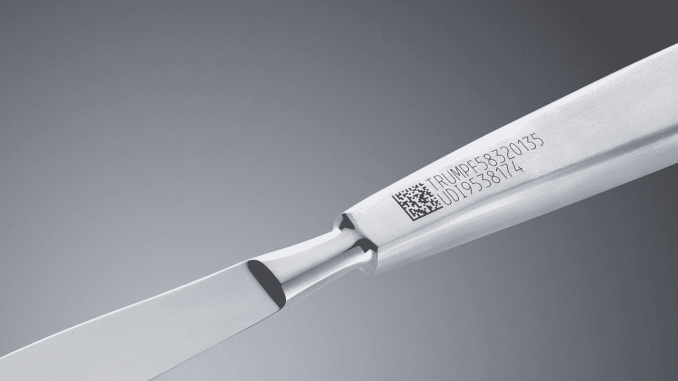
Black marking is a laser processing process that produces extremely dark, high-contrast marks on a surface without removing the material. Extremely short laser pulses form nanoscale structures on the surface. The microstructured surface ensures reduced light scattering and permanent marking dark black coloring with uniform viewing angles. If such marking is carried out with ultra-short laser pulses, this discoloration will also be corrosion-resistant within certain parameters. Why: Due to the use of ultrashort pulse lasers, the heat-affected zone is extremely small, so enough free chromium remains on the surface to form a self-healing oxide layer.
An overview of the advantages of black marking
Viewing angle stability
One of the great advantages of black marking is the so-called stability of the viewing angle. Periodic nanostructures reflect and absorb light that has been scattered many times, resulting in a very high uniform contrast from all viewing angles. This is an excellent feature especially in the watch or automotive industries, where a large number of decorative parts are used.
Dark black coloring
Laser processing significantly discolors the metal – until it takes on a deep black hue. In addition, the contrast and non-reflective matte appearance created by the black marking significantly improves the manual and machine readability of tiny pixels.
Fine marking
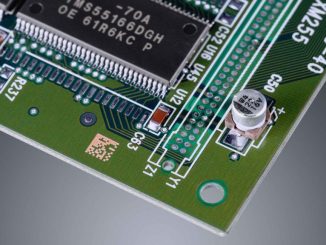
Black marking with ultrashort pulse lasers is ideal for fairly fine markings or small DMC (2D Code) and UDI (Unique Device Identification) codes. Compared to other laser marking machines, ultrashort pulse lasers offer nearly 10,000 times shorter pulse widths and higher energies, while also being able to mark with extremely small spot sizes. Therefore, the process is particularly suitable for generating fine markers.
Corrosion resistance
Many industries require corrosion-resistant markings. For example, according to the EU Medical Device Regulation, implants or surgical instruments must be marked with a traceable UDI (Unique Device Identification Number). Due to the short duration of action, the chemical integrity of the surface is preserved, as the chromium atoms hardly diffuse into the lower layers. Black marking enables a wide variety of corrosion-resistant markings that are legible even after multiple cleaning and passivation cycles.
UDI-compliant callouts
The EU Medical Device Product Regulation and the U.S. FDA (Food and Drug Administration) regulations require that medical technology products be permanently and legibly marked with traceable UDI codes (Unique Device Identifiers). Black marking with ultra-short pulses optimally meets all of these requirements for UDI marking due to its characteristics. As a result, even tiny UDI codes are legible for a long time thanks to their corrosion resistance, viewing angle stability, and deep black coloration.
Process description
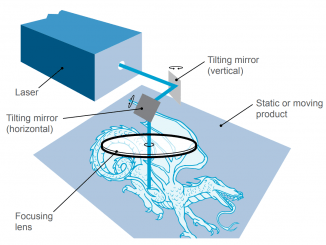
- Surface structure: Ultrashort pulse lasers with pulse widths in the picosecond or femtosecond order form the basis for corrosion-resistant black marking. They make material processing virtually unaffected by thermal and mechanical influences. Because the laser pulses – and the duration of the energy input – are so short that there is no temperature conduction to the adjacent atoms at all, thermal stress cracks that can occur when the parameters are not selected properly, e.g. in the case of a normal tempering, are also avoided. For this reason, it is also referred to as "cold working". The material is made with a nanoscale structure by means of a laser.
- Oxide: In addition to surface structuring, chromium oxide plays another central role in corrosion-resistant black marking: due to less thermal impact compared to annealing with nanosecond lasers, enough free chromium remains on the surface to facilitate the self-healing process of the passivation layer. During this period, a corrosion-resistant coating containing chromite (Fe2+Cr2O4) and magnetite (Fe3O4) or a coating consisting of a mixed phase: FeFe2-xCrxO4 (iron-chromium spinel) is formed.
- Passivation: After marking, the medical product is cleaned. Due to long action times, aggressive cleaning agents or high temperatures, the readability and durability of laser marks may be compromised. For this reason, post-treatment is usually carried out using a targeted passivation process. An acid bath consisting of nitric or citric acid removes reactive components on the surface, such as free iron ions, and helps to form a new chromium oxide layer cleanly and quickly for better corrosion resistance. At the same time, the surface is cleaned and the sulfides are dissolved during this process.

Be the first to comment