
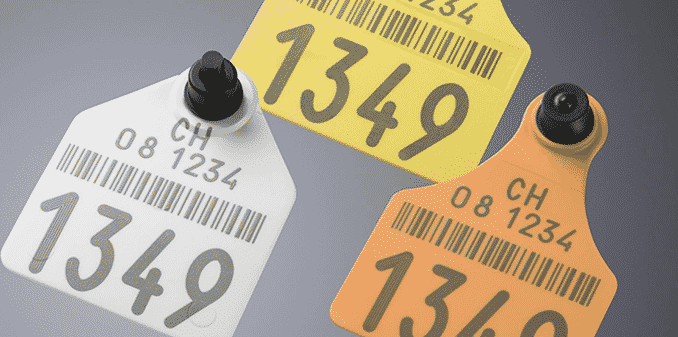
Lasers enable long-lasting and flexible marking of components made of synthetic materials, which are environmentally friendly and gentle on the material. This is because compared to the traditional marking process, there is no need for consumables such as samples or inks. Laser marking on the surface of synthetic materials is always resistant to scuffing and abrasion. There are basically three types of laser marking processes for synthetic materials: discoloration, surface change, and layer ablation.
Laser marking of synthetic materials focuses on the full absorption of the laser beam into the material. Because in the case of metals, the largest part is reflection, and in the case of synthetic materials, in addition to absorption, transmission or diffuse reflection also plays a large role. Due to the low thermal conductivity of synthetic materials, there is a slight loss of energy during the marking process. As a result, synthetic materials can be marked significantly faster than metals. The polymer building blocks of synthetic materials are typically absorbed in the ultraviolet and far-infrared ranges, while various additives such as carbon black or pigments are absorbed in different wavelength ranges. Since different wavelengths of lasers are available, wavelengths can be optimized for the respective material.
Which synthetic materials can be marked with a laser?
Depending on the synthetic material, the laser wavelength used, and the additives, different excellent marking results can be achieved with nanosecond lasers. In order to achieve high readability and marking quality, it is recommended to add laser-sensitive additives to some industrial synthetics. As a result, the properties of the synthetic material will be largely preserved.
Depending on the application, laser wavelengths play an important role in the marking of synthetic materials. With a double frequency (532 nm, green) or triple frequency (355 nm, UV) solid-state laser, the range of synthetic materials that can be easily marked expands. These wavelengths often provide better results than standard systems with wavelengths of 1.064 or 1.030 nm.
What should I pay attention to when marking synthetic materials?
Synthetics are a material that poses some challenges to many marking tools. The core challenge is the long-term readability of markings, which encounter natural limitations when using ink, for example. In addition, synthetic materials are not the same as synthetic materials. This means that the different properties of the material and additives often require tailor-made marking solutions. In this case, the laser is able to work more flexibly and can even avoid slight dirting on the surface and start working immediately without having to make a sample in advance – an essential task in screen printing or pad printing, for example.
Synthetic materials use the type of laser marking machine
Discoloration
Discoloration for laser marking of synthetic materials includes discoloration, fading, or carbonization. Color molecules can selectively fade or change their color. With the energy of the laser beam, individual molecules (e.g. pigments) can be destroyed or their structure can be changed in a targeted manner. The surface remains largely intact and smooth. During the carbonization process, the surface of the carbon-containing synthetic material burns or carbonizes. This process is often used for light-colored synthetic materials.
Etch
Multi-layer or painted synthetic materials can be laser marked by ablating thinner overlays. Contrast is created by the color of the underlying substrate or primer. At this point, the paint or special layer is removed from the laser-marked film. The keys inside the vehicle are an example of how markings can be obtained through an ablative layer. During the day, the symbols are white, and at night they can be seen from behind. For this day and night design, a laser with high pulse stability can be used to ensure precise and uniform ablation of the layer.
Foaming
Foaming or melting is the so-called surface change process. For laser marking of synthetic materials, the laser melts the matrix material in a targeted manner, creating bubbles that seal when cooled. The resulting raised marks are about 20 to 40 μm high and relatively wide. The light is diffusely reflected, and the markings on the dark synthetic material appear light. For this reason, foaming is often used in black or dark colors.
How do you laser mark flame retardant or flame retardant synthetics?
Especially when processing flame-retardant synthetics, the optimal coordination between the material and the wavelength is very important. In this case, it is recommended to use a UV laser. In this way, a dark gray mark can be applied to the light-colored material. The breaking of the chemical bonds causes discoloration. Since the material does not burn and carbonize, this marking is called a "cold mark" and has a high surface quality.
Marking synthetics with lasers: Your advantage
- Flexible: With a large number of possible wavelengths, powers, and parameters, the laser can be precisely adapted to the respective synthetic material.
- Gentle: Thanks to the non-contact cold laser marking, the surface of the component is virtually unaffected.
- High quality: With lasers, even contrast-free, clean and smudge-free ultra-fine marks can be achieved.
- Durable: Laser marks on synthetic materials are still legible even after years because they neither fade nor erase off.
Be the first to comment