
In the previous discussion of atomic energy levels, the energy level was considered as an idealized model with a certain definite value without a width, so that the radiation frequency v=(E2-E1)/h satisfying the transition selection rule is a single frequency.
According to the theory of quantum mechanics, the energy level of an atom cannot be simply expressed by a definite value, but has a certain width, which is called the natural width of the energy level.
In the microscopic field, time and energy cannot be accurately measured at the same time, if the uncertain value of time is denoted by △A, and the uncertain value of energy is denoted by △E, then the uncertain relationship is:
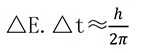 h is Planck's constant, and for the atomic energy level, the uncertainty of time corresponds to the average lifetime of the atom T, that is, the average residence time of the atom at that energy level, and thus the energy level width:
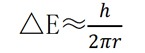 It can be seen that the shorter the energy level life, the wider the energy level width △E; Conversely, the longer the life of the energy level, the narrower the energy level width △E. From this, it can be inferred that the metastable energy level is narrow, and the average energy level lifetime of the ground state is T-8, so the ground state energy level width △F→∞ because the energy level has a width, so the frequency N in the original atomic radiation frequency formula should be understood as the central frequency, and the frequency width △VN is determined by the energy level width.
When the atom of the upper energy level of width △E2 transitions to the lower energy level of width AE1, the width of the spectral line around the center frequency △V0 is:
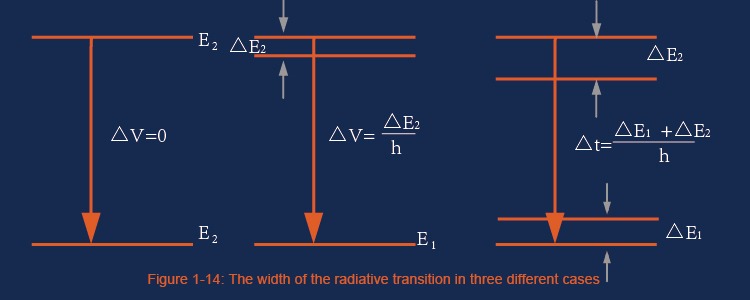
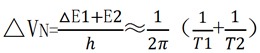 Figure 1-14 depicts the width of the radiative transition line due to the width of the energy level in three different cases. For example, the average lifetime of the two energy levels corresponding to the spectrum of the wavelength ⋏ = 632.8 nm (or the frequency V = 4.71 × lO14 Hz) emitted by the atmosphere atom is obtained by substituting the above equation for 3S2 as the upper energy level, T2 = 2××lO-8S for the 2P4 state as the lower energy level, and substituting the above equation can be obtained:
 This is consistent with the estimates made by the classical theories mentioned above.
Be the first to comment