
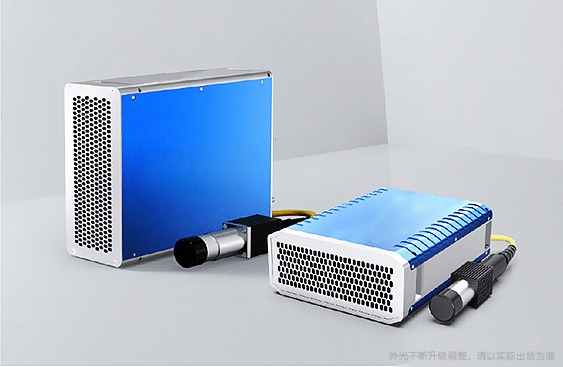
Highly directed radiation, usually generated by a laser (laser pulse) and delivered in the form of a laser beam, is a light pulse flickering light, which lasts for a very short time. The duration of the light pulse is much shorter than the time of heat conduction, and the energy of the light pulse is stored on the surface of the material for a very short time (ultra-short).
Phenomenon:
- A Gaussian pulse with a center frequency of 300 THz (corresponding to a wavelength of 1 μm) easily corresponds to a bandwidth of 30 THz≈ Maintain a pulse time of 15 fs (provided that the pulse is transform-limited).
- The shortest optical pulses generated directly in the laser (passively mode-locked Ti:Sapphire lasers) have a duration of about 5 fs and only a few optical periods (few-period femtosecond pulses) can be applied. Compression techniques such as pulses can only have very few femtosecond pulse durations, but higher harmonics can generate attosecond pulses.
Business Applications:
- Many commercially important laser sources (passive Q-switched lasers) produce nanosecond pulses (which typically have considerable pulse energies) that are not considered to be particularly short, so nanosecond pulses (from nanosecond lasers) are also used in the processing of laser materials. This is all based on the desired pulse duration, pulse energy, and pulse repetition rate, using different pulse generation, pulse compression, and pulse characterization methods, which generally cover a very wide range of parameters.
High peak power and strength advantages
The ability to short pulse duration and strong focus is limited, and if there is a medium pulse energy, the light pulse can also produce extremely high light intensity: a 10-fs pulse with only 10 mJ of energy has a peak power of about 1 TW = 1000 GW, which corresponds to the combined power of about 1000 large nuclear power plants. This power can be easily concentrated at a point with a diameter of only a few microns.Therefore, amplified ultrashort pulses are very important for high-intensity physics,Many photon ionizations, the generation of higher harmonics, and shorter attosecond pulse durations have been studied.
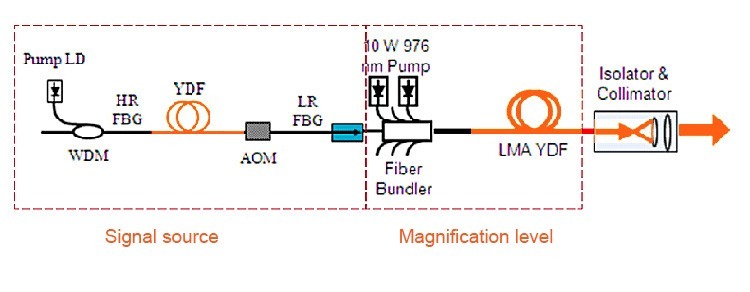
Characteristics of light pulses
There are now a variety of methods to measure the duration of the pulse achieved or other aspects of pulse characterization. Especially for measuring the duration of ultrashort pulses, of course, pure optical technology is very important, because the effect achieved with ultrashort pulses is too slow.
Single or repetitive pulse generation
Short laser pulses are typically in a single mode (on-demand pulses with short and irregular interruptions between pulses) or in a repetitive mode, typically in the kilohertz region. In contrast, ultrashort pulses (i.e., durations in the picosecond or femtosecond range) are typically in the form of bursts with high repetition rates of many megahertz or even many gigahertz.
Generation of pulse trains
In certain cases, the laser source does not produce periodic pulse trains, but rather periodic burst sequences, where each pulse train consists of a certain number of short or ultrashort pulses. Within larger bursts, high repetition rates may occur: in the megahertz or gigahertz region, the repetition rate of the burst can be much lower, but even lower in the kilohertz region.
Burst sequences
There are many very interesting aspects of pulse propagation in the media. The pulse peak in a transparent medium propagates at group velocity rather than phase velocity. Dispersion causes the pulse to be time-broadened (or sometimes compressed). However, for high peak intensity, optical nonlinearity will strongly affect pulse propagation. They often result in pulse broadening, but strong nonlinear compression is also possible.
Of course, in addition to experimental tests, it is also possible to simulate and study the details of pulse propagation by means of various numerical values. In specific cases, such as pulse propagation in single-mode fibers or free-space propagation with a fixed Gaussian beam profile, one can ignore the lateral spatial dimension to consider the complex amplitude of each position as a function of time or frequency, which of course requires complex numerical models to study the complete spatiotemporal pulse evolution.
Be the first to comment